Myrrh’s spiritual meaning centers on suffering made sacred. Across scripture and centuries of ritual, this bitter tree resin marks the heavy moments: anointing, mourning, burial, and devotion that costs something. Gold honored a king and frankincense honored a priest, but myrrh, the embalming spice handed to a newborn, carried the strangest message of the three famous gifts.
The symbolism isn’t arbitrary. It grows directly out of what myrrh is and how people obtained it, which is where any honest explanation has to start.
What Myrrh Is, Literally
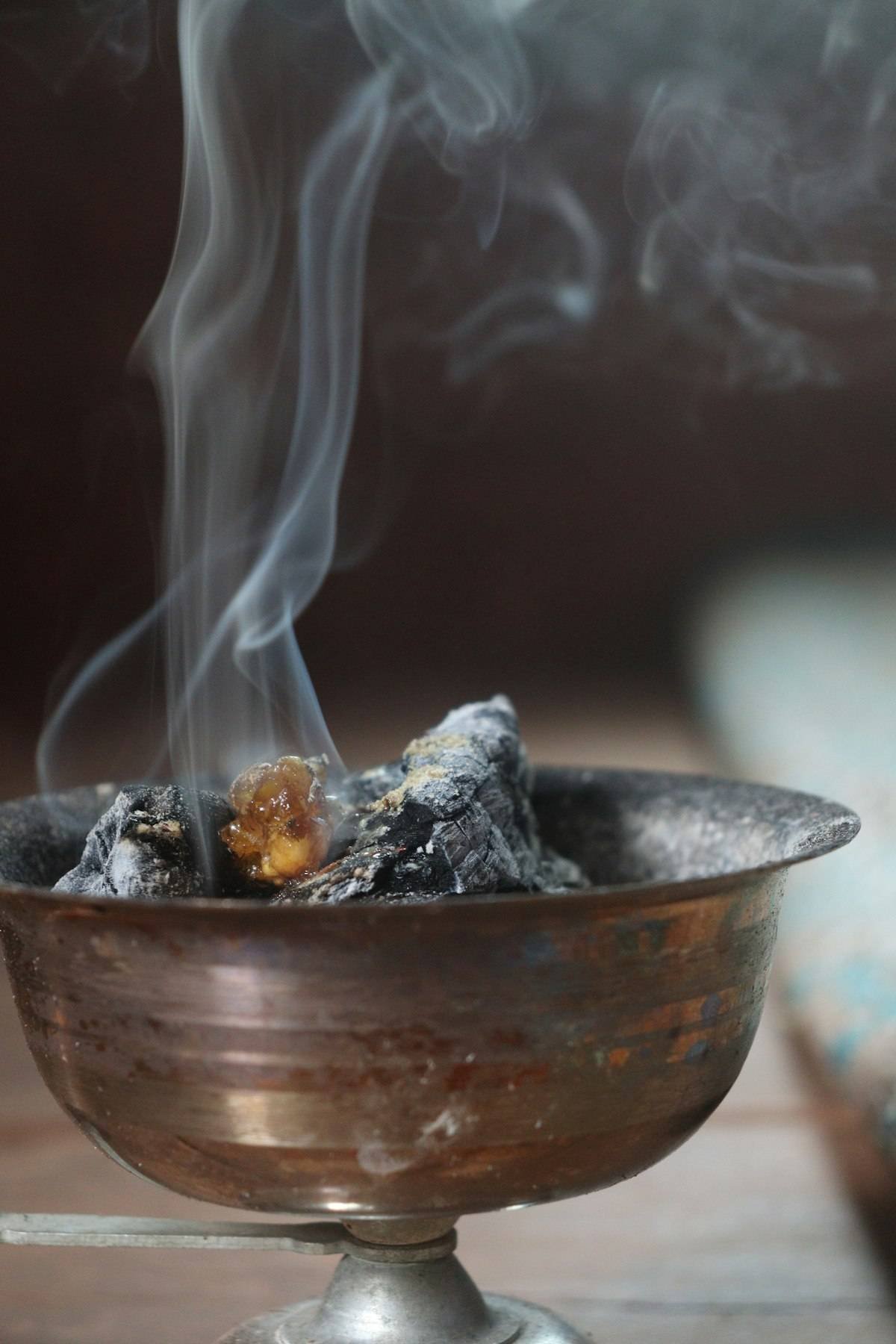
Myrrh is the dried sap of Commiphora trees, thorny, scrubby species native to the Arabian Peninsula and northeast Africa, per Wikipedia. Harvesters wound the bark on purpose; the tree bleeds a gum that hardens into reddish-brown tears, which are collected, dried, and burned as incense or pressed into oils.
That harvesting detail quietly powers the symbolism. The perfume literally comes from a wounded tree, and its taste is sharply bitter, which is why so many traditions reach for myrrh when they need to speak about grief.
Myrrh in the Bible: Four Moments That Define It
Myrrh appears at the hinge points of the biblical story, and the pattern across those appearances is what gives the resin its meaning. Four passages do most of the work:
| Passage | Moment | What myrrh signifies there |
|---|---|---|
| Exodus 30:23 | Ingredient in the holy anointing oil | Consecration, being set apart |
| Matthew 2:11 | The Magi’s gift to the infant Jesus | A foreshadowing of death alongside kingship |
| Mark 15:23 | Wine mixed with myrrh offered at the crucifixion | A mercy for suffering, refused |
| John 19:39 | Nicodemus brings myrrh and aloes for burial | Honor in death, costly devotion |
Read in order (the Matthew passage is the famous one), the arc runs from consecration to death to burial. That is why Christian tradition treats the Magi’s myrrh as prophecy: the gift wrapped the whole story, birth to tomb, into one jar.
Why Myrrh Came to Mean Suffering and Consecration
The ancient world knew myrrh primarily as an embalming and anointing substance, expensive enough that offering it was itself a sacrifice. Handing it to someone said two things at once: you are set apart, and your path includes loss. The bitterness of the raw resin reinforced the message, and many commentaries connect the word itself to Semitic roots for bitterness.
None of this makes myrrh a symbol of despair. In every scene above it appears in acts of care: anointing, easing pain, honoring a body. The consistent thread is love expressed at a painful moment, which is a more precise meaning than the vague “sacredness” often attached to it.
Frankincense and Myrrh Together
The two resins are paired constantly, and tradition assigns them complementary roles: frankincense rises as prayer and worship, myrrh grounds as sacrifice and humanity. Burning them together, a practice alive in churches and home altars today, joins the two ideas, devotion directed upward and endurance carried through the body. The pairing predates Christianity; both resins moved along the same incense trade routes and appear together in Egyptian and Near Eastern ritual records.
How People Use Myrrh Spiritually Today
Modern practice keeps the old assignments. Churches include myrrh in chrism oil for anointing; incense blends sold for meditation lean on it for grounding; and folk and pagan traditions, the source of the “witchcraft” association, burn it for purification, protection, and honoring the dead. Practitioners disagree on plenty, but the resin’s job description barely changes across traditions: it accompanies endings, transitions, and commitments that cost something.
The same instinct shows up in everyday superstition, the way small bodily signs get read as messages, something we’ve covered in the site’s guide to what an itching finger means spiritually. Humans assign meaning where feeling runs high, and myrrh has been the designated scent for the heaviest feelings for about three thousand years.
A Short Note on Health Claims
Myrrh carries a long list of wellness claims, from oral health to effects on the brain, and most of them rest on folk-medicine history, not clinical proof. Herbalist sources commonly advise pregnant women to avoid myrrh entirely. Anyone planning to ingest it or put concentrated oil on skin should ask a qualified professional first, not an incense-shop label.
When in doubt, burn it, don’t eat it.
FAQ: Myrrh Spiritual Meaning
What does myrrh signify in the Bible?
Myrrh in the Bible signifies consecration and coming suffering: it anoints priests in Exodus, foreshadows death among the Magi’s gifts, and honors Jesus’s body at burial. Its appearances consistently pair love with loss.
Why was Jesus offered myrrh?
Jesus encountered myrrh twice at the end of his life: as a pain-dulling additive in wine at the crucifixion, which he refused, and as a burial spice brought by Nicodemus. Both uses were established customs of the period.
What does burning frankincense and myrrh together do?
Burning frankincense and myrrh together is a traditional pairing of worship and sacrifice, prayer rising with the frankincense while myrrh grounds the ritual in endurance. Practically, it produces a resinous, slightly bitter-sweet smoke used in churches and meditation spaces.
What is myrrh called today?
Myrrh is still called myrrh; the resin comes mainly from the tree Commiphora myrrha. You’ll find it sold as raw resin tears, essential oil, and an ingredient in church incense and chrism oil.
If you came here holding a bag of resin from a shop, the practical summary: burn it on charcoal, expect bitterness in the scent, and know that the tradition you’re joining used this exact smell to say goodbye, to consecrate, and to keep loving through the hard part.